Injured by a Defective Product in Arkansas? We’re Here to Help
When a product doesn’t function as intended and causes injury, the consequences can be life-changing. Arkansas law provides a legal pathway for holding manufacturers, sellers, and distributors accountable when unsafe items reach consumers. These laws protect the public and ensure that those harmed by negligence or oversight can seek fair compensation.Whether harm stems from inadequate safety testing, poor-quality materials, or missing hazard warnings, legal accountability matters; taking action supports your recovery and helps prevent similar incidents. Yes, you can take legal action when injured by a defective product in Arkansas, and doing so may protect others as well.

Were You Injured by a Defective Product?
Hire a Fort Smith Product Liability Lawyer
CALL US TODAY
What Is Product Liability?
Product liability is a legal framework holding businesses accountable when their products cause injury or harm. These cases fall under civil law, allowing injured individuals to seek compensation. Under Arkansas Code §16-116-202, manufacturers and sellers can be held liable when their products do not meet safety standards or have inadequate warnings.Product liability claims usually arise under one of three main theories: negligence, strict liability, or breach of warranty. While each has its legal nuances, the core idea remains the same: those who bring dangerous products to the market must take responsibility for the damage they cause.
Understanding Strict Liability in Arkansas Product Cases
Strict liability is a legal principle that allows injured consumers to hold manufacturers, distributors, or sellers accountable for defective products without the need to prove negligence. This framework simplifies the legal process for those harmed by dangerous or malfunctioning products, removing the burden of showing that a company was careless in its actions.Under Arkansas law, a strict liability claim requires evidence that the product was inherently unsafe, posed an unreasonable risk during normal use, and directly caused injury. It focuses solely on the product’s condition, not the company’s conduct. This approach aligns with Arkansas’s goal of protecting consumers by ensuring that businesses take full responsibility for the safety of the goods they introduce into the marketplace.
Strict liability is significant in complex product cases, where proving specific acts of negligence can be difficult or impractical. Instead, it emphasizes product design, manufacturing, and safety compliance.
What to Do Immediately After a Product Injury
Swift action following a product-related injury is crucial—not only for your well-being but also to preserve the strength of your legal claim. The decisions made in the hours and days after an incident can significantly influence the outcome of your case. To protect your health and your rights, we recommend the following:- Seek prompt medical attention, even for injuries that seem minor.
- Secure and safely store the defective product, including all components.
- Retain the original packaging, instruction manuals, and receipts.
- Document the scene and your injuries through photographs and video.
- Avoid modifying, repairing, or discarding the product.
- Record a written or digital account of the incident while your memory is clear.
- Keep a log of symptoms, treatments, and out-of-pocket expenses.
The Role of Expert Witnesses in Product Liability Cases
Expert witnesses provide critical support in product liability cases by clarifying complex technical issues. These professionals bring specialized knowledge that helps courts understand how a product failed and why that failure led to injury. Their testimony can influence liability and damages, playing a central role in evaluating and resolving cases. Depending on the circumstances, expert witnesses may include:- Engineers or designers who assess whether a product meets safety and design standards.
- Product safety analysts evaluate whether known risks were addressed or ignored.
- Medical professionals who explain the nature, extent, and cause of injuries.
- Forensic specialists who reconstruct the incident to demonstrate the sequence of events.
Differences Between Individual Claims and Mass Tort Actions
Individual Product Lawsuits
These involve a single plaintiff filing a claim for harm caused by a specific defective product. The claim is handled separately, and outcomes are based solely on that individual’s damages and case facts.Mass Torts and Multidistrict Litigation (MDL)
Mass torts involve many people injured by the same product. While each plaintiff maintains an individual case, the legal process may be streamlined. MDLs consolidate similar cases for efficiency, often involving shared evidence and expert testimony.How We Help You Decide Which Path to Take
At Taylor King Law, we evaluate whether your situation is best handled individually or as part of a larger action. We aim to pursue the path that gives you the greatest chance of meaningful recovery.Product Liability Laws Specific to Arkansas
Arkansas enforces a comprehensive legal framework to protect consumers from defective or unsafe products. These laws apply to every point in the product’s life cycle—from design and manufacturing to marketing and final sale. Under Arkansas Code §§ 16-116-202 and 16-116-203, individuals injured by a product may hold parties in the distribution chain liable for resulting damages. The statutes provide the foundation for claims involving design flaws, inadequate warnings, and manufacturing errors. Additionally, Arkansas law permits claims based on negligence and breach of warranty, expanding the potential avenues for legal recovery. These statutes recognize a consumer’s right to expect safe, reliable goods and place the burden on businesses to uphold that standard. By supporting strict liability, Arkansas promotes accountability while easing the burden of proof for the injured party.Why Time Matters in Filing a Claim
Timing can make or break a product liability case. Besides the statute of limitations, which is generally three years, other time-sensitive factors come into play:- Physical evidence may deteriorate or be discarded.
- Witness recollections fade with time.
- Product recalls or updates may complicate causation arguments.
- Insurance carriers have deadlines for notice and documentation.
Types of Product Defects That Can Lead to Injury
Design Defects
A design defect exists when the very blueprint of a product is unsafe. This means every unit of that item poses a risk, regardless of how well it was manufactured. For instance, a car model with an unstable frame that increases the chance of rollover accidents would be an example of a design flaw.Manufacturing Defects
These occur during the production process. The product might have an overall safe design, but something went wrong at the factory. Imagine a batch of tires missing a crucial layer of rubber—even though the design was safe, the final product was not.Marketing Defects (Warnings & Labels)
Even well-made products can be dangerous if they don’t come with appropriate warnings. A medication lacking instructions about potential side effects or a child’s toy without an age-appropriate warning label may expose users to unnecessary risk.Who Can Be Held Liable in a Product Liability Case?
Responsibility for a dangerous product rarely falls on a single party. Liability can be shared across multiple points in the product’s journey to the consumer. The following entities may each be held legally accountable:- Manufacturers, including those who create specific components or materials.
- Distributors and wholesalers are involved in the supply chain.
- Retailers that marketed or sold the product to consumers.
Common Products Involved in Lawsuits
Medical Devices
Defective pacemakers, surgical mesh, or hip implants can cause serious complications. These cases often require reviewing medical records and regulatory filings to establish liability. Devices recalled by the FDA or subject to warnings from the medical community can further support the claim.Automotive Parts
Brakes that fail, airbags that don’t deploy, or steering components that malfunction have all led to injury claims. Vehicles with flawed safety mechanisms can quickly become death traps on the road.Household Appliances
If poorly made or incorrectly wired, everyday items such as space heaters, blenders, or pressure cookers can cause burns, electrocutions, or fires. The results can be devastating when these products catch fire or break down under regular use.Children’s Toys
Toys with choking hazards, toxic materials, or malfunctioning components are subject to strict safety standards. According to the U.S. Consumer Product Safety Commission, all toys must comply with federal toy safety guidelines, including proper labeling and age grading.How to Prove a Product Liability Claim
Building a strong product liability claim requires more than just proving harm. It demands a clear connection between the defective item and your injury. To move forward with a valid claim, the following elements must be established:- A defect existed in the product
- The product was used in a way that could reasonably be anticipated
- That defect was the direct cause of your injury
- You experienced measurable damages, such as medical costs or lost income
- Medical records and physician statements
- The physical product itself (preserved if possible)
- Photographs or videos of the product and injuries
- Expert analysis or engineering reports
- Witness accounts of the incident
What Compensation Can You Recover?
Depending on the extent and circumstances of the injury, compensation in a product liability claim can cover economic and non-economic losses. Common forms of recovery include:- Medical bills for treatment and ongoing care have already been received.
- Income lost due to time away from work or reduced earning capacity.
- Pain and suffering are tied to the physical impact of the injury.
- Emotional and psychological distress.
- Punitive damages are awarded in cases involving willful misconduct or gross negligence.
Why Choose Taylor King Law?
At Taylor King Law, we combine local roots with a strong track record of fighting for Arkansans harmed by dangerous or defective products. Our team has experience with cases involving unsafe medications, toxic consumer goods, and vehicle-related product failures. We’re actively involved in mass tort and class action litigation and committed to holding large manufacturers accountable. What sets us apart:- Personalized support from our Fort Smith legal team
- Timely communication and transparent case updates
- A client-first approach shaped by decades of service in Arkansas
Frequently Asked Questions
Do I Need to Keep the Defective Product?
Yes. Preserving the product can significantly strengthen your case. It may serve as physical evidence of the defect and help experts demonstrate how the injury occurred. Store it securely, take photos, and note how it was used during the incident.How Long Do I Have to File My Claim?
Under Arkansas law, you generally have three years from the date of injury to file a product liability lawsuit. However, time limits can vary depending on specific case details, so it’s best to act quickly to preserve your rights.Can I Still Sue If I Was Misusing the Product?
It depends. The manufacturer may still be liable if your use was foreseeable (i.e., not grossly improper). For example, using a space heater in a bathroom may be considered foreseeable, even if the product warns against moisture exposure. Courts will evaluate the reasonableness of your actions.Contact a Fort Smith Product Liability Lawyer Today
Product-related injuries can leave families reeling, both physically and financially. When a trusted item fails and causes harm, it’s not just unexpected, it’s unacceptable. That’s why reaching out to a Fort Smith product liability lawyer is a smart move. At Taylor King Law, we take the time to understand what happened, explain your legal options, and guide you forward with clear communication and steady support. Each case we handle starts with a conversation—one focused on listening to your story and exploring the most effective path toward accountability.
On Your Side – By Your Side
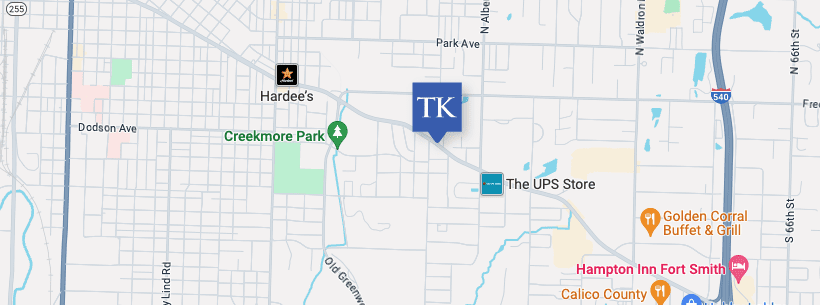
We have a local office on Rogers Avenue, so that we can be on your side, and by your side in Fort Smith. Come by and see us today, for a free consultation; or call us toll-free at 1-800-305-0529.

If you were injured in a bicycle accident, our attorneys are prepared to walk through the process with you.
Protecting Your Personal Injury Rights
REACH OUT VIA FORM

Visit our Law Office in Fort Smith
Our attorney’s office in Fort Smith is located just east of downtown Ft. Smith and a short drive from I-540. We’re available if you need to speak with an attorney face-to-face. An initial consultation is both free and confidential.
Because we work on contingency fees, you won’t owe us anything unless we recover damages from the insurance company. Contact us today to learn more.
Toll Free
Out of State
Local
Fax